A Flexible Indolocarbazole Ligand Platform for Tunable Multinuclear Metal Complexes #473
Authors
Cristina Decavoli, Jana Jelušić, Sebastian M. Huber, Victor S. Batista, Gary W. Brudvig
Abstract
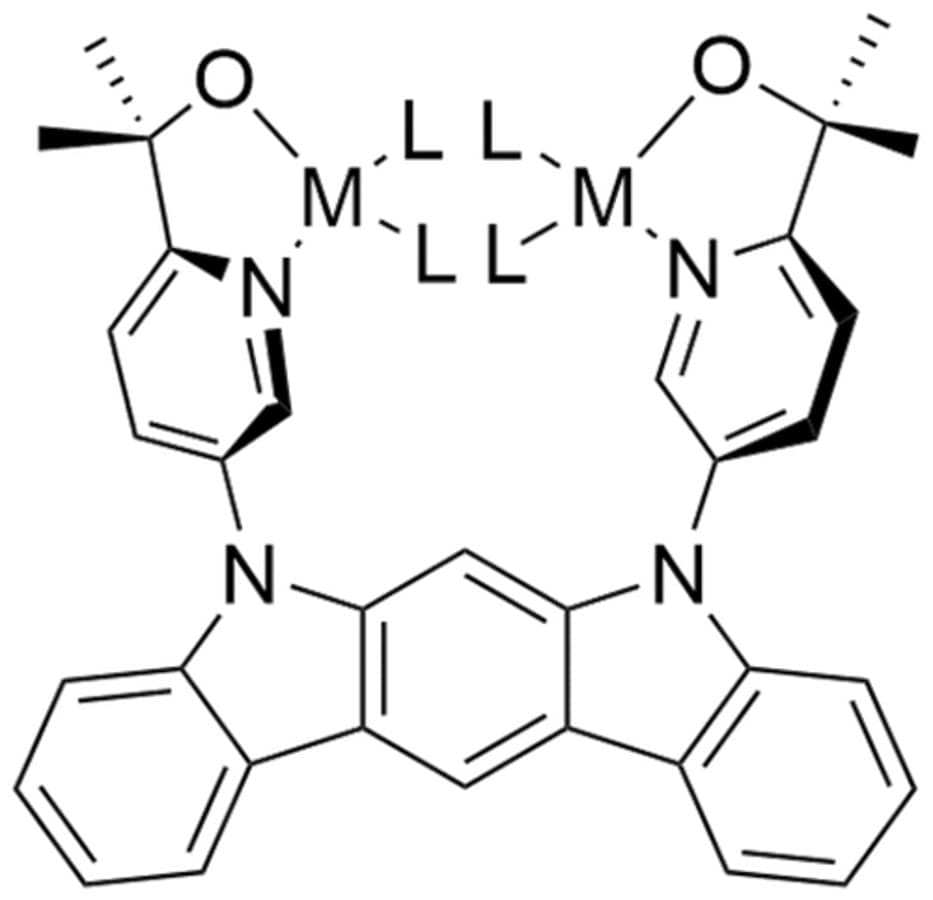
We introduce a flexible indolocarbazole-based ligand platform for constructing multinuclear metal complexes with tunable metal–metal separations and donor strength. The platform is functionalized with two 2-(2′-pyridyl)-2-propanoate units. This architecture provides rotational freedom that enables access to multiple coordination geometries, while deprotonation modulates ligand donor power. Coordination to iridium affords a tetracarbonyl diiridium complex with an Ir···Ir distance of 4.6 Å; computational studies indicate that μ-oxo incorporation could contract this separation to values relevant for high-valent iridium water oxidation catalysts. In contrast, copper coordination yields a tetranuclear solid-state assembly that dissociates into dinuclear units in solution and features a well-defined molecular pocket with Cu–Cu separations reminiscent of methanotrophic enzyme active sites. Although steric and oxidative limitations currently restrict catalytic activity, the ligand frameworks ability to enforce specific metal–metal distances and encapsulate small molecules highlights its promise as a modular platform for multinuclear catalysis and gas-binding applications.